Learn the peptide basics
The pages to read before any profile. What a peptide is, how to tell approved from investigational from unapproved, what bacteriostatic water does, and how reconstitution and injection actually work.

Guides
- FDA status trackerWhich peptides are FDA-approved, which HHS tolerates under conditions, and which are not legal to use. One row per peptide, with sources and check dates.
- Are peptides safe?Approved peptide drugs have measured risks. Compounded ones skip FDA review. Research-use vials have no safety review. What is known about each kind.
- Bacteriostatic waterSterile water with 0.9% benzyl alcohol, so one vial can be used for up to 28 days. How it differs from sterile water, storage, and who must avoid it.
- How to read a COAWhat each line on a peptide COA means: HPLC purity, mass spec identity, net content, endotoxin and sterility, plus red flags and what a COA cannot prove.
- How to reconstituteHow a prescribed freeze-dried vial is mixed with bacteriostatic water, the mg/mL and units math worked through, storage, and mistakes that waste a vial.
- What are peptidesPeptides are short amino acid chains. Some are FDA-approved drugs for diabetes, obesity and bone loss; many sold online are not. What each is used for.
- Peptide therapyPeptide therapy is a clinic term, not a medical one. It mixes FDA-approved, compounded and unapproved peptides. How to tell which you are being offered.
- Injection sitesMost peptide drugs go under the skin of the abdomen or thigh, and some labels add the upper arm. Which sites each label names, plus rotation and technique.
Being written
Published one batch a week, each after clinician review.
- Peptide storage: fridge, freezer, travel
- Reading a compounded vial label
Read these in order
- What peptides are and what they are used for
- Are peptides legal? The FDA status tracker
- Bacteriostatic water
- How to reconstitute a peptide, with the calculator
- Where and how to inject
Stuck on a term? The glossary defines about 80 of them in plain English. For a shorter path, the Start here page strings five pages together in about 20 minutes of reading.
Which kind of peptide are you looking at?
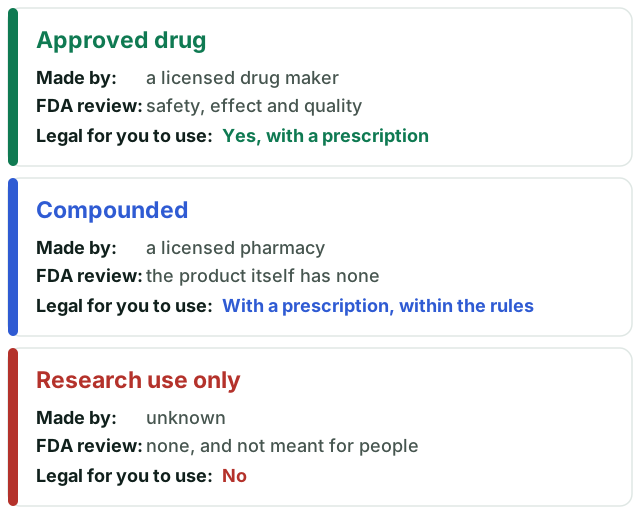
Start here, because everything else depends on it. A peptide is a short chain of amino acids, and online the same word covers approved drugs, pharmacy-compounded products and research chemicals. Those are very different things with very different evidence. What are peptides explains the science, and the status tracker records where each one stands with the FDA.
Are peptides safe?
It depends on the kind. Approved peptide drugs have risks that were measured in large trials and printed on the label. Compounded versions are not FDA-reviewed, and FDA has logged more than 1,700 adverse event reports for compounded semaglutide and tirzepatide, some tied to dosing errors. Research-use-only peptides have had no safety review, and they are not legal to use on people. The are peptides safe guide goes through each kind, and how to read a certificate of analysis explains what a lab report can and cannot prove.
What is peptide therapy?
It is a marketing term for prescribing peptides, usually by injection, for weight, aging, recovery or sexual health, so it tells you nothing about one specific treatment. A clinic's list can mix approved drugs, compounded products and unapproved peptides. The peptide therapy guide shows how to tell which is which.
What does the hands-on part involve?
If your prescription comes as a powder, you will need three things: the right liquid, the math and clean technique. Bacteriostatic water is the diluent most compounded peptides use, the reconstitution guide covers mixing and storage, and the calculator finds the dose on the syringe. The injection sites guide covers where the needle goes and how to get rid of it safely.