Peptides in skincare
Peptides on the skin are a different world from peptides in a syringe: cosmetics, not drugs, with small studies that are often paid for by the ingredient maker. This section says what each ingredient is, what was tested, and how to read a label, without ranking products.
Guides
- Copper peptide serumCopper peptide serum contains GHK-Cu, listed as copper tripeptide-1. See what studies found, the strengths tested, what is known on mixing, and its limits.
- Choosing a peptide serumNo trial compares finished peptide serums, so no honest best list exists. Use this label checklist: named peptides, percent, claims, patch test, timing.
- Peptide serumPeptide serums are cosmetics backed by small, often company-run studies. What each type does, how to read the label, and what has stronger evidence.
- SNAP-8SNAP-8 is a trade name for acetyl octapeptide-3. No published study tests it alone, and its wrinkle figure comes from the supplier. See the evidence.
Are peptide serums regulated like drugs?
No. A serum that contains a peptide is regulated as a cosmetic. The FDA does not approve cosmetics or review whether they work before they are sold, and a cosmetic may not claim to change the structure or function of the skin. Claims like "boosts collagen" are marketing language, and the evidence behind them is usually a small study of the ingredient rather than of the bottle you are holding.
What do the peptides in serums do?
Cosmetic peptides fall into four groups: signal peptides meant to prompt collagen production, carrier peptides that deliver copper, enzyme inhibitors, and neurotransmitter-inhibiting peptides marketed as topical alternatives to Botox. Each has a few small controlled studies, many run by ingredient makers, and a 2026 meta-analysis found only two randomized trials of topical peptides that met its criteria. The peptide serum guide goes through what was tested.
Two ingredients get their own pages because the marketing runs well ahead of the data. We found no peer-reviewed study ofSnap-8 on its own, and its headline wrinkle figures come from its supplier. A copper peptide serum contains GHK-Cu, which does not pass easily through intact skin, and most products do not state their percentage.
Is a cream the same as an injection?
No, and the difference starts with where each one ends up. A serum sits at the surface, while an injection goes into the fat beneath the skin, so a result from one tells you nothing about the other.
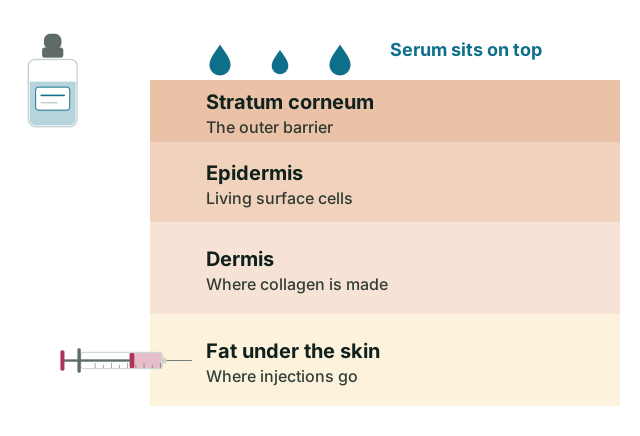
Copper peptide in a cream and GHK-Cu in a vial share a name and little else. The human studies are of creams, while the injected form has no human trials and no compounding route. The GHK-Cu profile covers the injected side, and topical GHK-Cu covers the skin side.
How do you choose a serum?
Start from the label, because no published trial compares finished products. Check which peptides are listed, whether the percentage is stated, and whether the claims stay within what a cosmetic can honestly promise. Then patch test for 7 to 10 days and give it 6 weeks to 3 months. How to choose a peptide serum shows how to read an ingredient list. If your goal is skin aging in general, peptides for skin compares every option, including the prescription retinoids and sunscreen that have the strongest evidence of all.